For reference, Uniswap pool TVL on Base as of 2 October 2026, alongside HyFi’s liquidity:

Bids and Asks

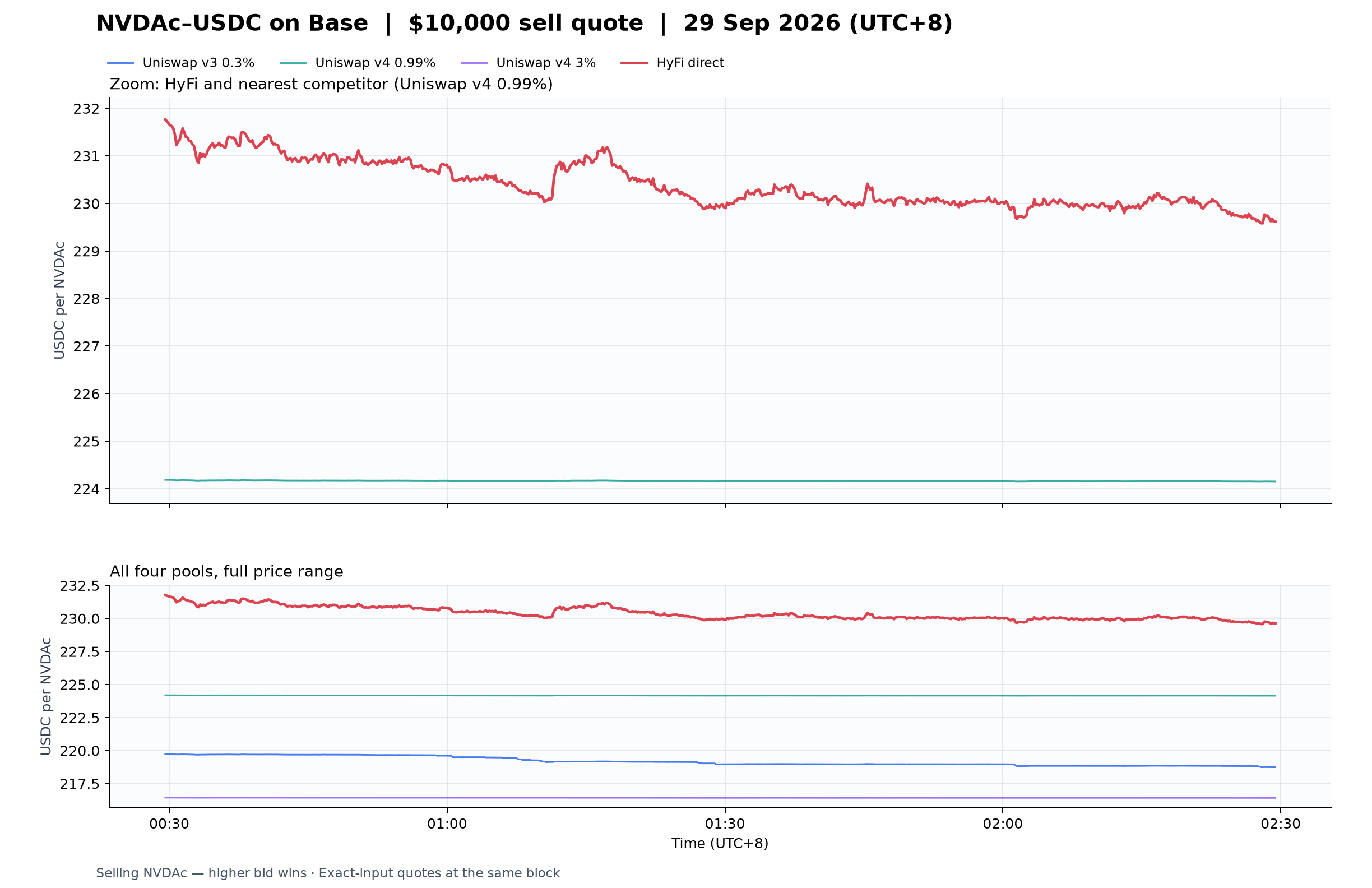
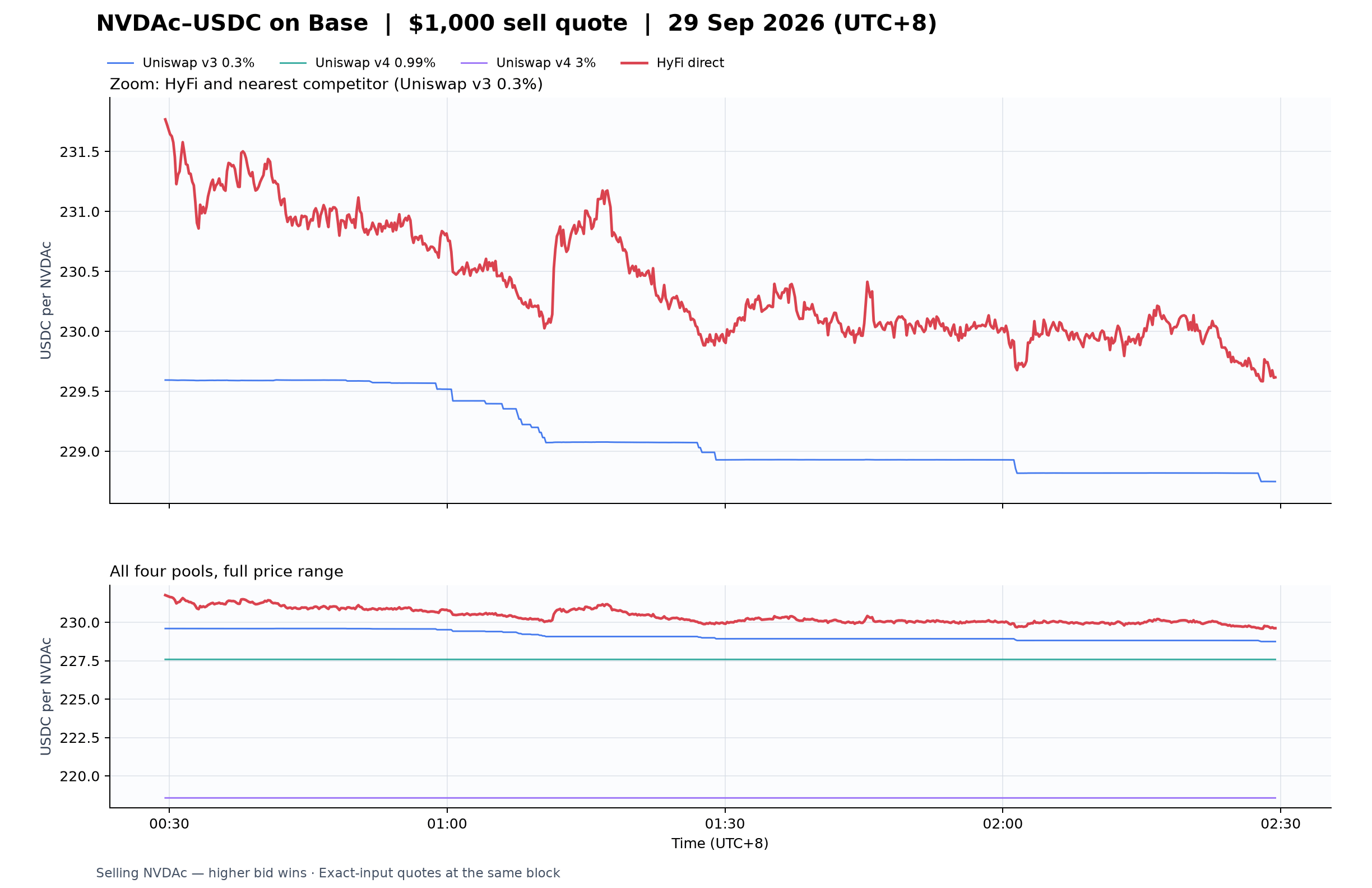
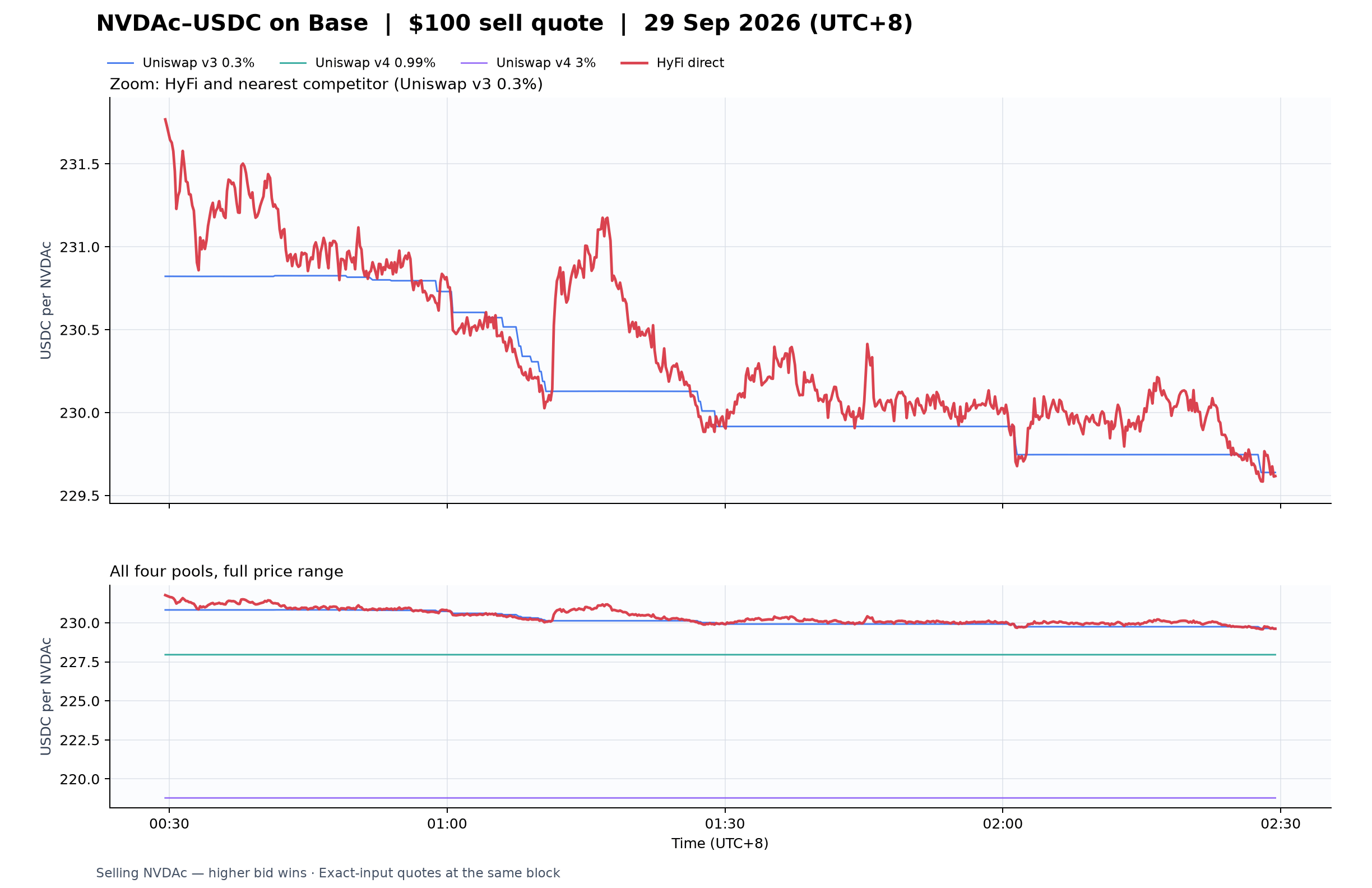
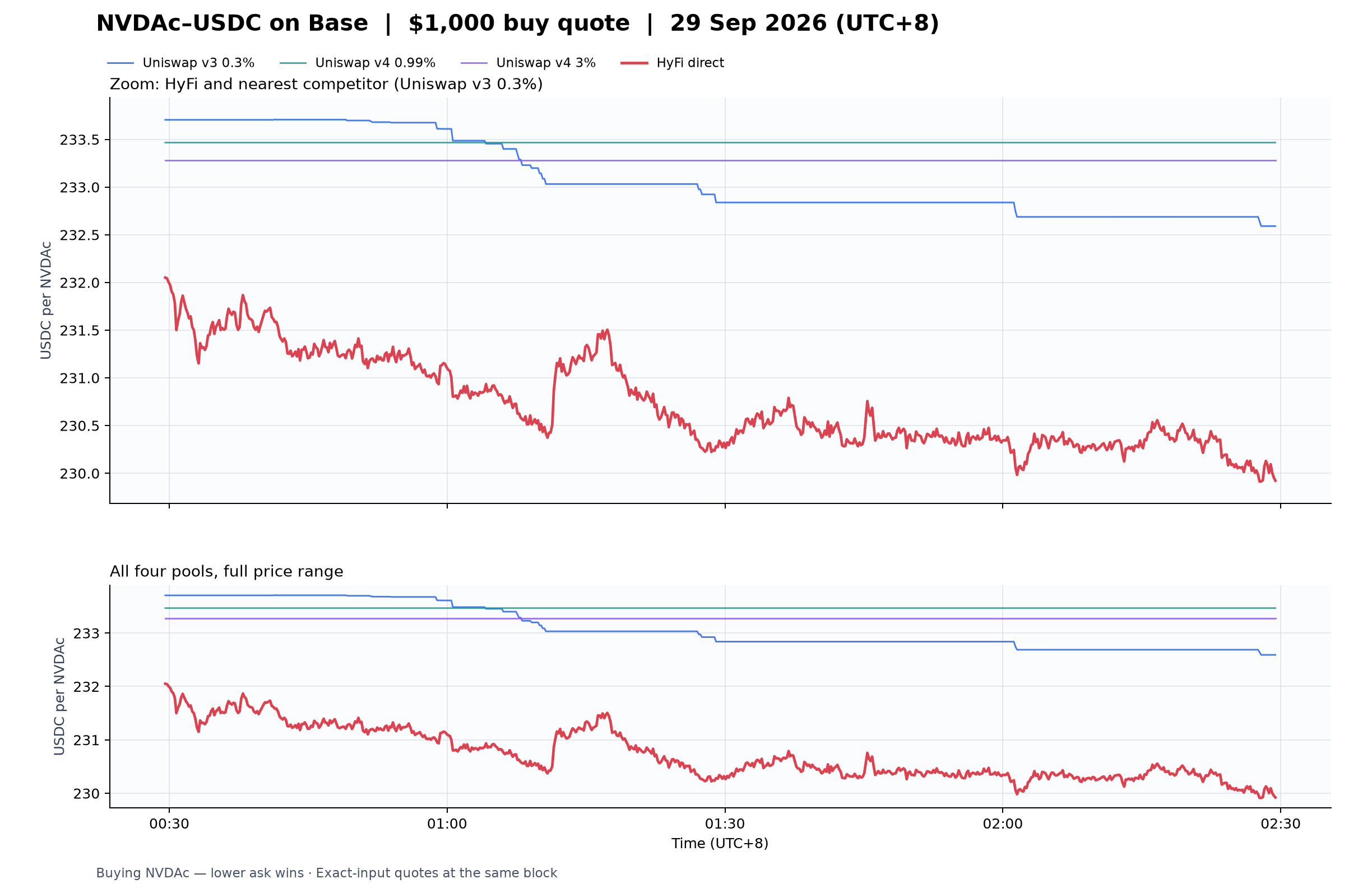
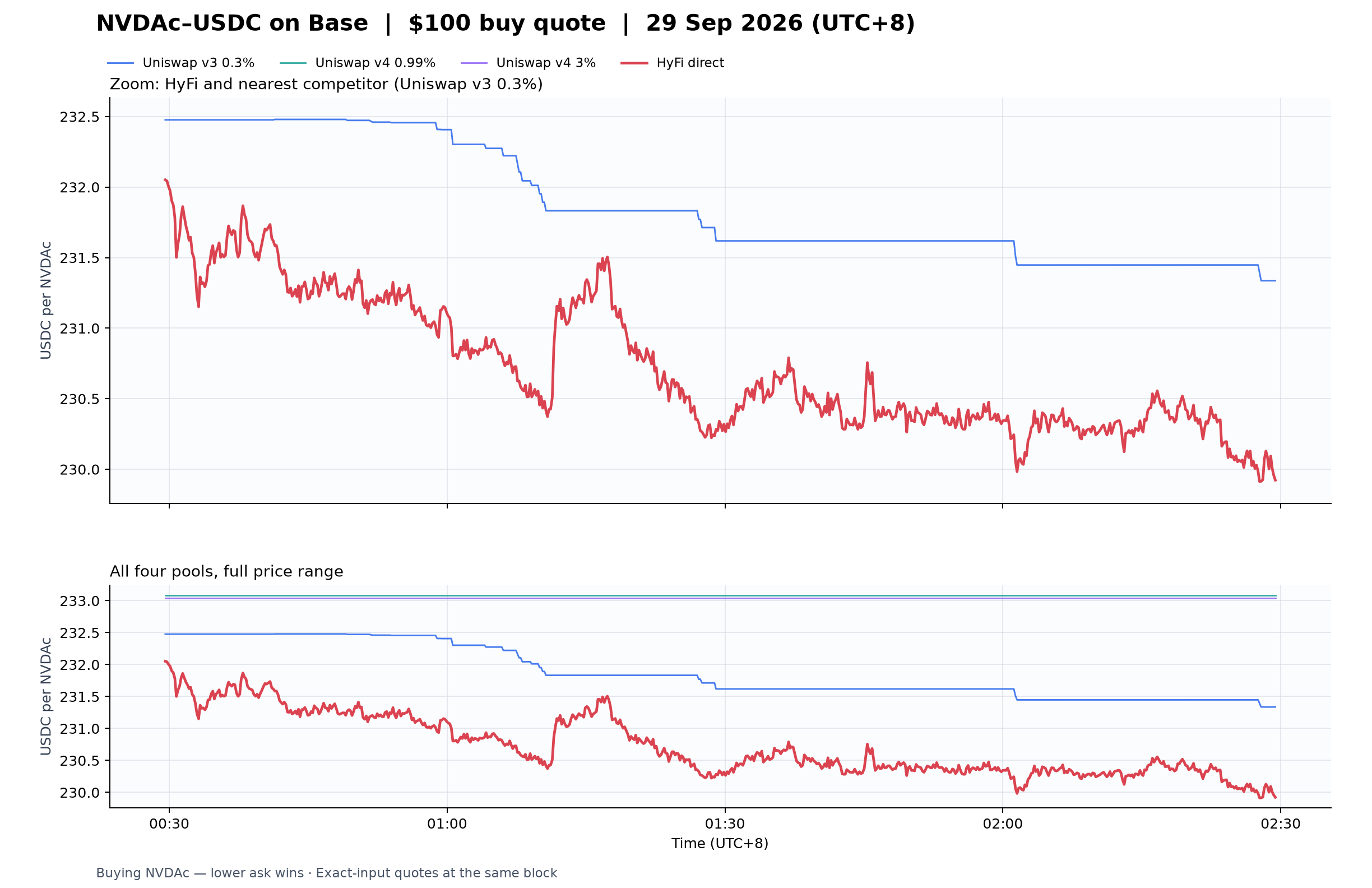
The win-rate table above covers the full comparison. The graphs below show two hours of data so the lines are easier to distinguish. HyFi’s market maker uses a 0.05% fee; the other pools in this comparison use higher fees.

Bids

If a user is selling NVDAc, they want to sell to the highest price that someone is willing to buy at. HyFi is the red line, so being the line at the top will win trades.
Base Nvdac Usdc Bids 10000

Asks

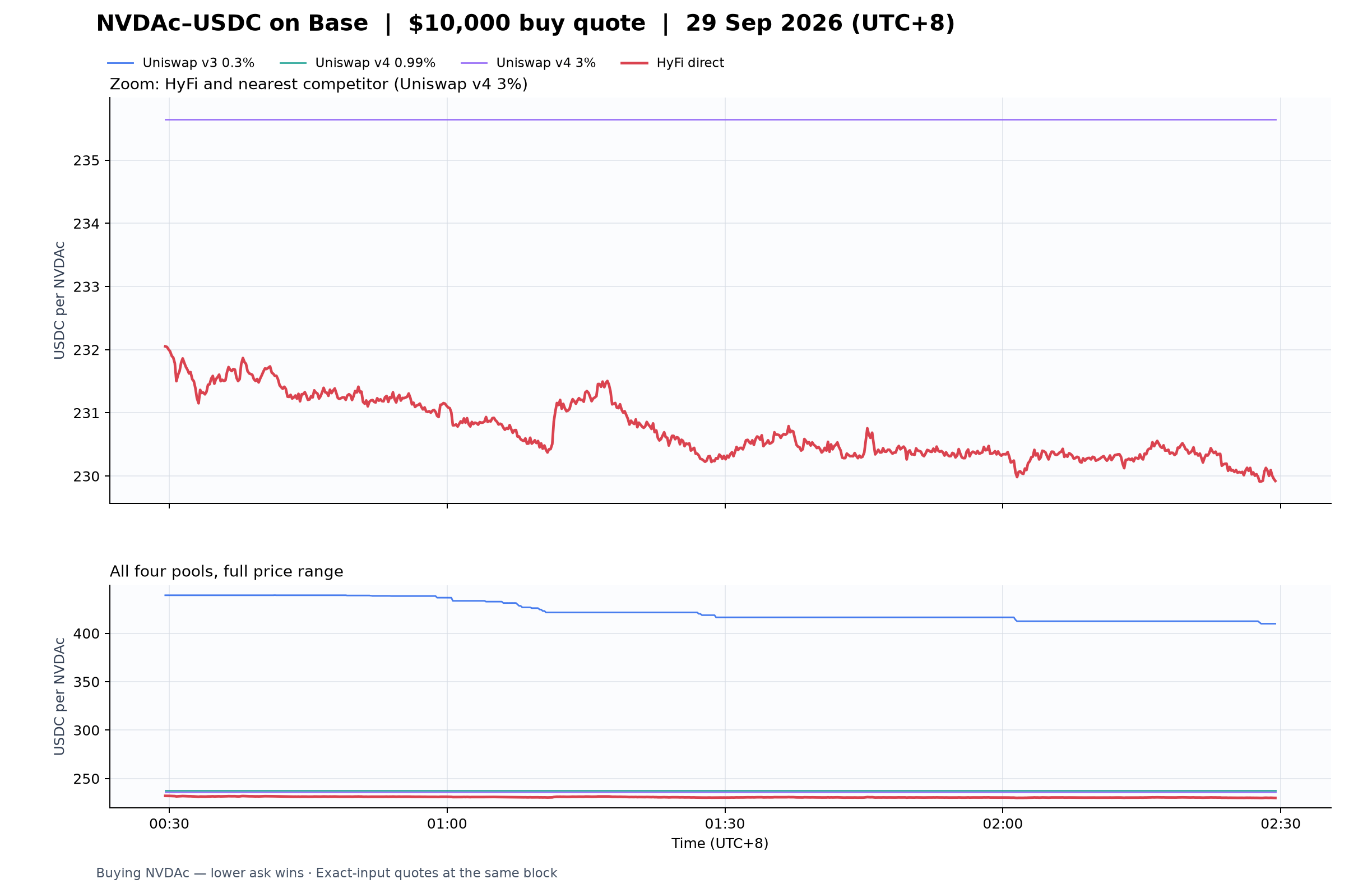
If a user is buying NVDAc, they want the lowest price that someone is willing to sell at. HyFi is the red line, so being the line at the bottom will win trades.
Base Nvdac Usdc Asks 10000

Conclusion

HyFi is clearly extremely competitive at every trade size. It wins every $10k bid and ask, almost every $1k bid and ask, and over 90% even at $100. Its $20k liquidity is about 1.5–5 times smaller than the Uniswap pool TVLs shown above. When passive pools lag behind a falling market, their better bids can attract toxic flow. Avoiding those trades, while competing on slippage, is central to HyFi’s profitability. The thing that matters most to HyFi’s profitability, other than avoiding toxic flow, is its ability to compete on slippage, which depends on the slippage on DEXes compared to CEXes. Competing on L2s gives HyFi an advantage compared to L1s when lower pool TVL means higher DEX slippage, while the CEX slippage is unchanged.